Skip to content
Voltiva Mobility

Charging

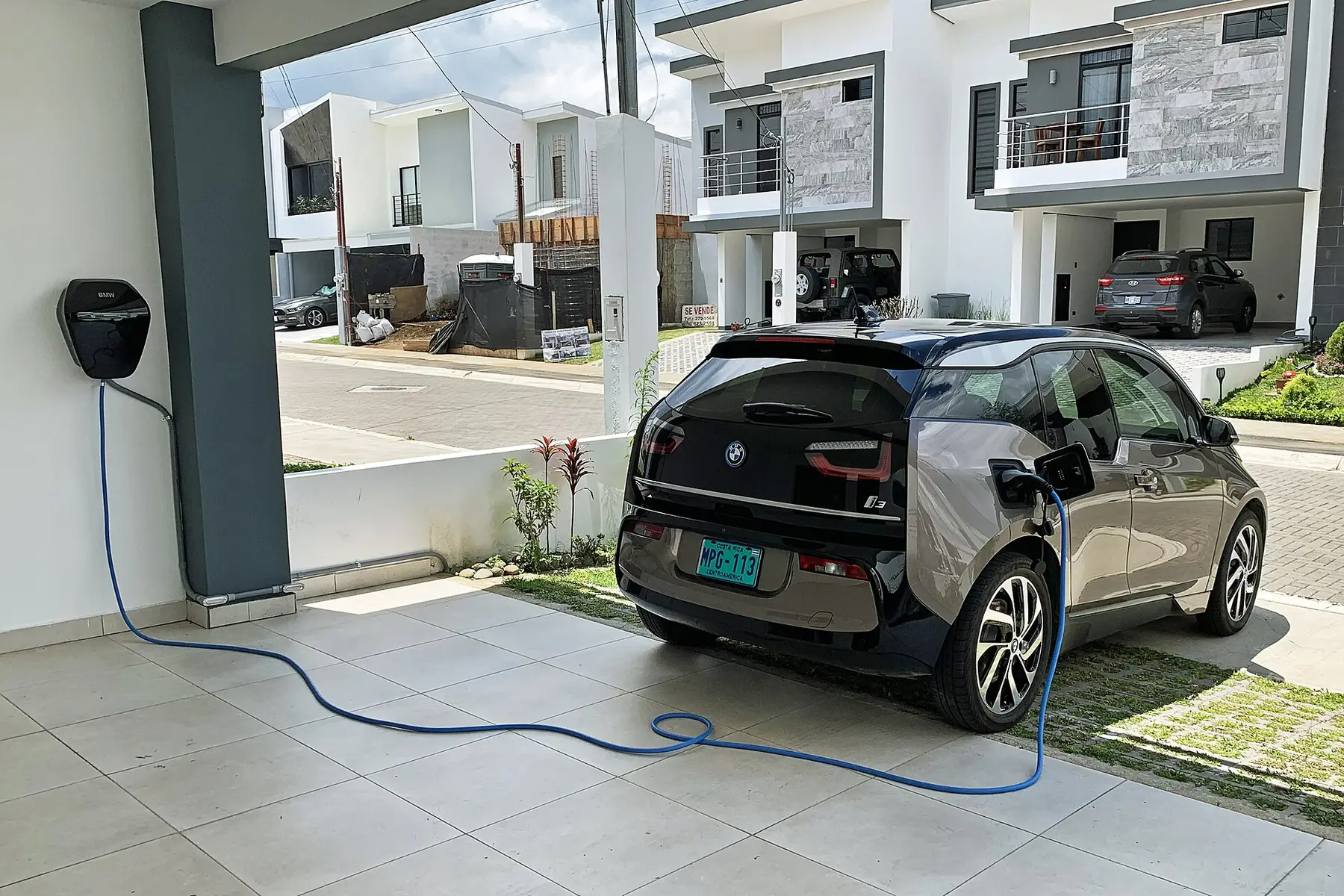
Charge your Voltiva electric car at home from a normal 230V socket. No wallbox, no installation.

Charging a small electric car is as simple as charging a phone. Park, plug in, and it is full by morning.

Charge at home from a normal socket

Every Voltiva car comes with a portable charging cable that plugs into a standard 230V household socket – no wallbox, no electrician, no installation. From empty to full takes between four and eight hours, depending on the model, so an overnight charge always does it.

What does it cost?

Our batteries hold between 5.8 and 14.4 kWh. At a typical home electricity price, a full charge costs between about €1 and €3 – for 75 to 177 km of driving. With a night-time tariff it can be even less.

Charging away from home

Most owners never need a public charger. If you do, our L7e cars can use public Type 2 chargers with an adapter, which is available as an accessory.

Good charging habits

  • Plug in whenever it is convenient – LiFePO4 batteries do not mind being topped up.
  • Use a socket on its own circuit if possible, and never an extension reel.
  • In summer, park in the shade when you can. The car and the battery will thank you.

If you are not sure your parking space has a suitable socket, ask us – we can check before you buy.

Last updated 23 Sep 2026

Jargon buster

The technical terms, in plain English

L6e light quadricycle
An EU class for small, light electric cars limited to 45 km/h. In Spain you can drive one from age 15 with an AM moped licence, which makes them ideal for town driving.
L7e heavy quadricycle
An EU class for compact electric cars that can reach up to 90 km/h. You need a B1 licence (from 16) or a normal car licence, and they can use main roads around the island.
Ah (amp-hours)
How much charge a battery can hold. At the same voltage, a higher Ah number means a bigger battery and more range between charges.
kWh (kilowatt-hours)
The amount of energy a battery stores – the best single number for comparing batteries. It is also how your electricity is billed, so it tells you roughly what a full charge costs.
CoC (Certificate of Conformity)
A document from the manufacturer confirming the car matches its EU-approved design. It is needed to register the car in Spain, and we supply it with every car.
VIN (Vehicle Identification Number)
A unique 17-character code stamped on the car – like a fingerprint. It appears on the registration papers and identifies the car for insurance and servicing.
LiFePO4 (lithium iron phosphate)
A type of lithium battery known for safety and long life. It handles heat well, can be charged thousands of times and does not need topping up or maintenance.
EPS (Electric Power Steering)
An electric motor that helps you turn the steering wheel, so parking and tight streets feel light and easy.
EU type approval
Official confirmation that a vehicle model meets EU safety and environmental rules. Only type-approved cars can be registered and driven legally on Spanish roads.

News & Advice

More about Charging

All articles on this topic

Register your interest

Ready to go electric?

Tell us a little about how you drive. A member of our team in Mallorca will call you within one working day to answer your questions, arrange a test drive and prepare a quote.

  • No obligation, no pressure
  • Test drives anywhere on the island
  • Registration and finance handled for you
Name
Email
Phone
Where in Mallorca?
Which car are you interested in? How will you use it?
Short trips around town
A daily commute
Coast and mountain roads
Longer trips across the island
Business or deliveries
I would like a finance quote
Please handle the registration for me
Message

We use your details only to answer your enquiry. Privacy Policy